Your Prospects Are Already Asking About It. Are You Ready?
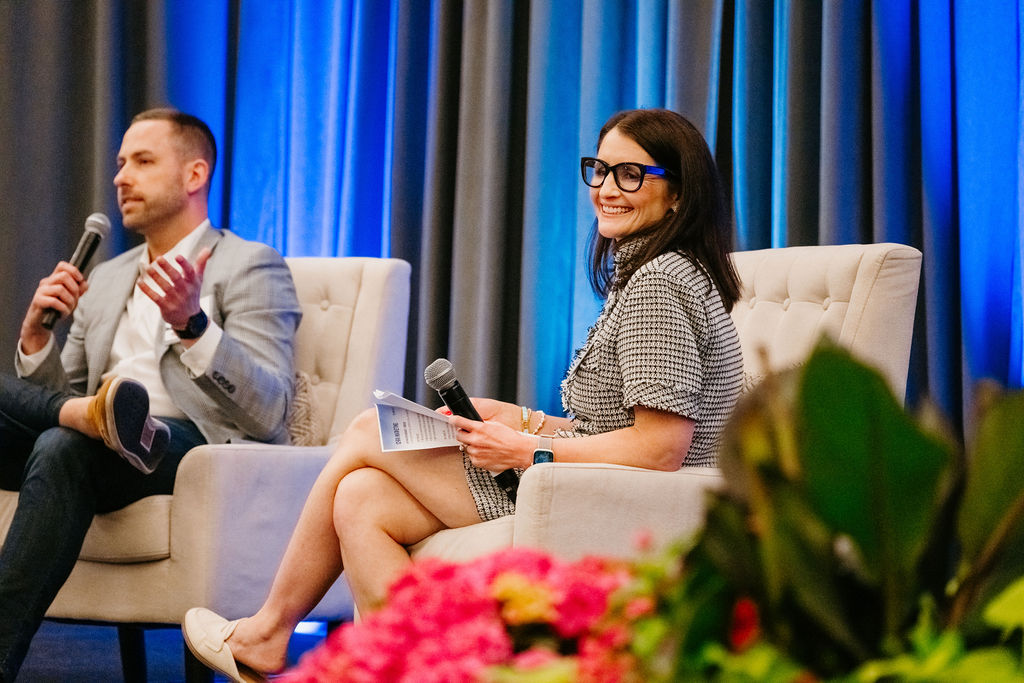
I was in Nashville earlier this month presenting at the ICHRA Conference alongside Andy Stein of The Worksite Group. Our session was a marketing case study: specifically, how benefits brokers can position themselves as ICHRA-forward before their prospects start asking questions they can't answer.
But here's the thing: the core problem we described isn't unique to the benefits industry. It shows up in almost every B2B category.
Most companies aren't actively marketing the thing their prospects are already researching. And the competitors who are? They're winning deals before the conversation even starts.
The problem isn't awareness. It's timing.
Here's the scenario we walked through in Nashville: a client brings up a topic in a planning meeting. The broker scrambles. "We can do that, but…" Meanwhile, the competitor already has messaging, materials, and a clear point of view ready to go.
The gap between being able to do something and being positioned to talk about it confidently is where deals are lost.
Positioning isn't just about what you offer. It's about whether prospects can find you, trust you, and choose you before they ever pick up the phone.
The four-stage customer journey (and where most companies drop the ball)
The framework Andy and I shared maps the customer journey into four stages. Each one requires different content, different questions answered, and different proof:
1. They find you. Do prospects know you exist when they're first researching the problem? This is where SEO, LinkedIn thought leadership, and educational content do the heavy lifting.
2. They trust you. Can you answer their comparison questions? Prospects at this stage want to know how your approach stacks up against the alternative, and whether you know what you're talking about. Blog posts, guides, and email nurture sequences earn trust here.
3. They choose you. Can you deliver on your promises? At this stage, prospects need social proof, clear timelines, and specifics. Testimonials, case studies, and conversion-focused content close the gap.
4. They become fans. Winning the client is one thing. Keeping them is another. Ongoing education, proof of results, and community create the retention and referrals that make growth sustainable.
Most companies invest almost entirely in stages 3 and 4. They focus on closing and on keeping existing clients happy. Stages 1 and 2, where prospects are quietly forming opinions long before they reach out, get almost no attention.
Start with awareness. That's where everything begins.
The action we recommended in Nashville: audit where you are in your category conversation right now. Can you clearly explain the thing your prospects are already researching? Do you have content that answers their stage-one questions? Is your website doing any of this work, or is it just a digital business card?
If the answer is no, start there. Pick one stage, one content type, and build from the top down. Awareness first, because if they can't find you, none of the rest matters.
The companies that win aren't always the ones with the best product or the most experience. They're the ones who show up with the right message at the right moment, before prospects even know they're ready to decide.
That's what it means to be forward in your category.
Want to talk through where your company lands in this framework? That's exactly what we cover in a Sea Salt & Seltzer strategy session.